
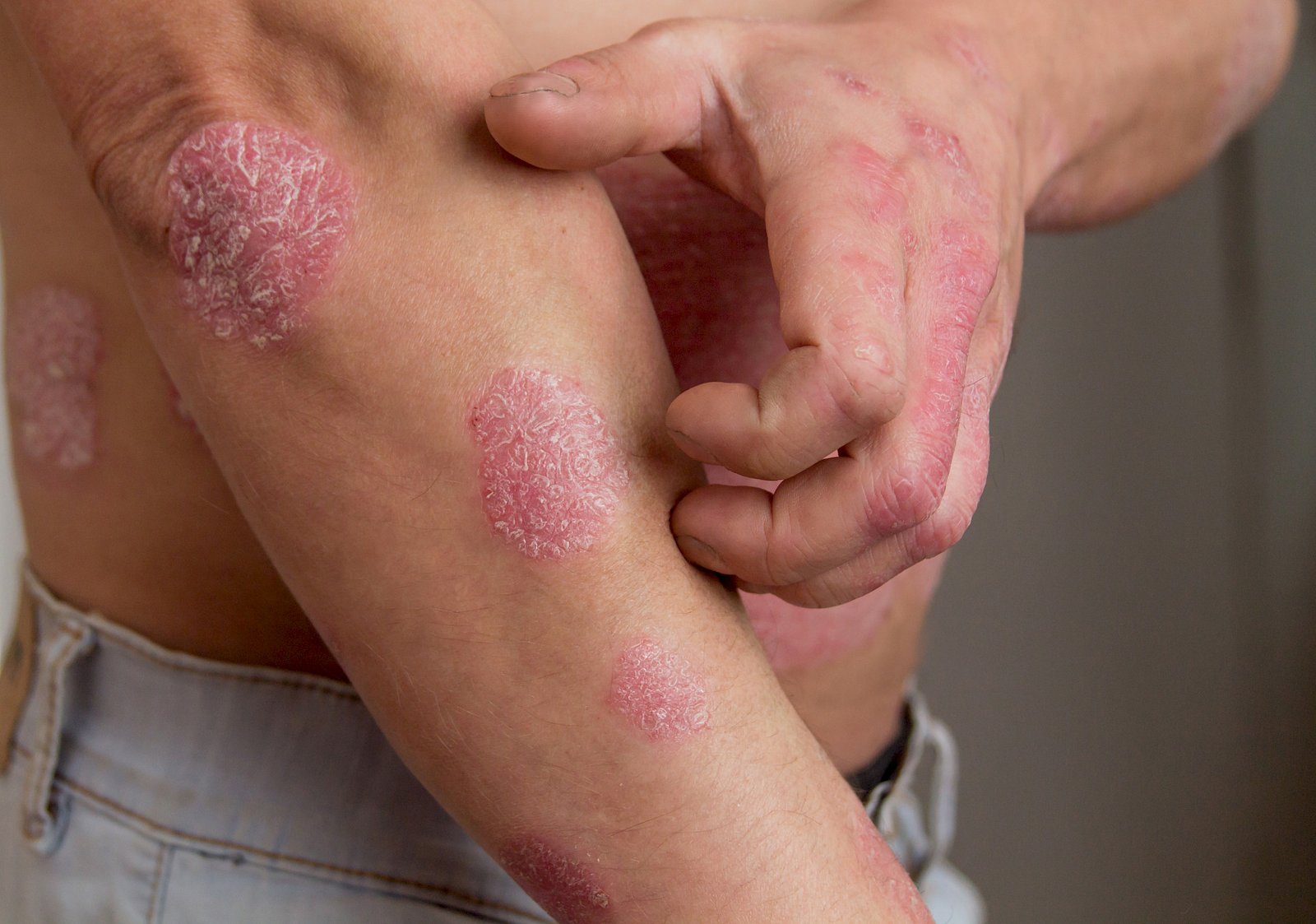
Psoriasis :
Psoriasis is a chronic skin condition that causes cells to build up rapidly on the surface of the skin.The typical life cycle of a skin cell is one month.In people with psoriasis, this production process may occur in just a few days.The extra skin cells formed from rapid over production , form the whitish silver scales and red patches that are itchy.
Psoriasis is generally thought to be a genetic disease that is triggered by environmental factors.Some people inherit genes that make them more likely to develop psoriasis. If you have an immediate family member with the skin condition, your risk for developing psoriasis is higher.Psoriasis is not contagious. Psoriasis typically starts or worsens because of a trigger that you may be able to identify and avoid. Common triggers are Infections, injury, Stress, Smoking, alcohol consumption, Obesity, Certain medications
Treatments :
Topical and oral medications
Phototherpy